
Picture a woman in Gulu who runs a small tailoring business. It is eleven at night, the children are asleep, and she is trying to work out whether to raise her prices before the school term starts. She types the question into Google on a phone with a little data left on it.
She has never heard of AVODA. Nobody in her church has mentioned us. If one of our articles comes up, opens quickly, and answers her question well, that is the first time AVODA has served her. If the page takes a minute to load and eats her data, it is also the last.
She is imagined. The people in her position are not: Google’s September report suggests there were hundreds of them last month, and they are the reason I spent part of this year on a website.
What Google saw in September
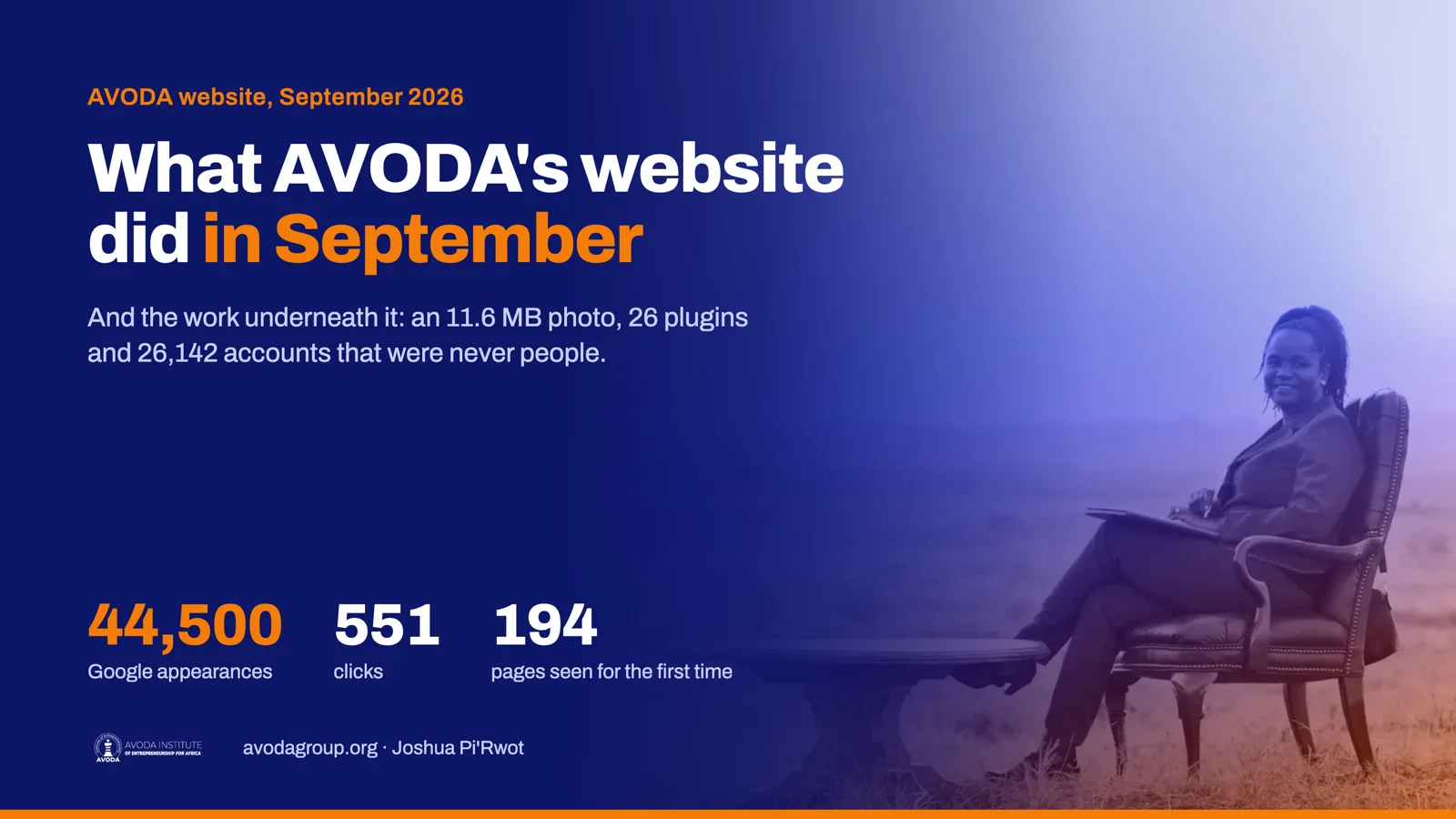
On 6 October Google Search Console sent us its monthly summary for avodagroup.org. Our pages appeared in search results 44,500 times in September. 551 people clicked. 194 of our pages were shown to someone for the first time.
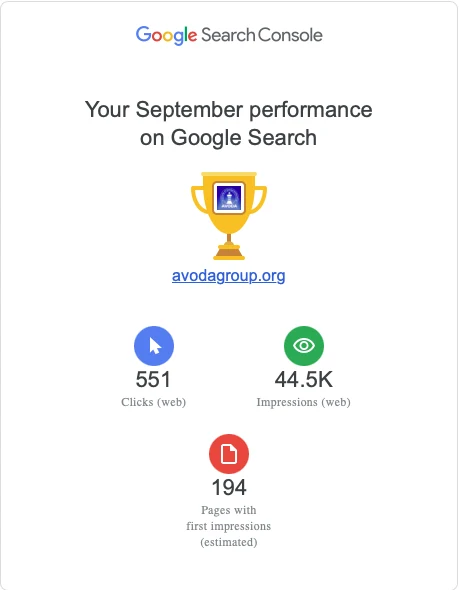
Only 54 of those 551 clicks came from people who typed our name. The other 497 never typed “AVODA” at all. They were searching for help with something, and an article of ours answered them.
The searches that did use our name were small and telling: 19 clicks for “avoda uganda”, 18 for “avoda institute of entrepreneurship” and 17 for plain “avoda”. People who already know us look for us by country and by our full name. Everyone else arrives by the question they were trying to answer, which means the questions we choose to write about decide who meets us.
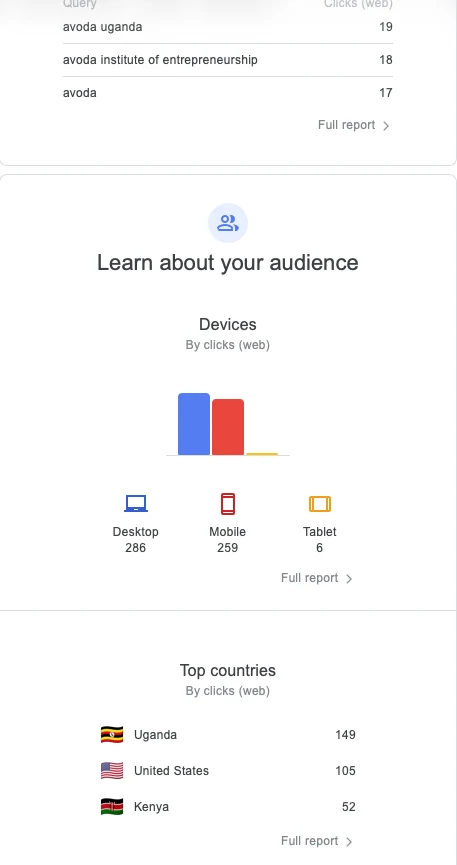
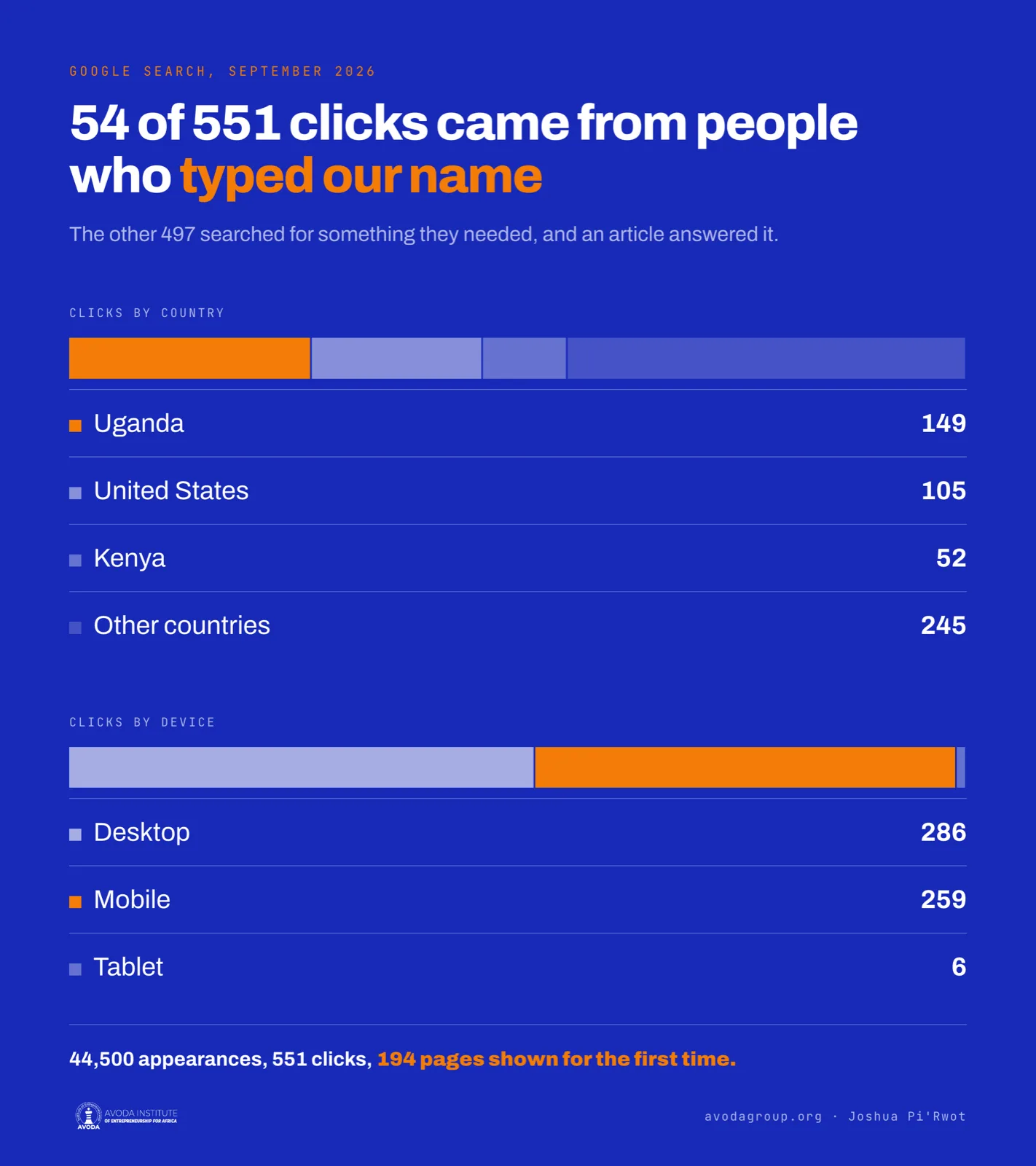
Uganda sent 149 clicks, the United States 105 and Kenya 52, with 245 from everywhere else. Desktop and mobile were nearly even, 286 and 259. The American readers are mostly partners, donors and Ugandans abroad who read the faith and work essays. The Kenyan readers are the ones I find most encouraging, because nobody sent them. They found us.
Those numbers are modest. A click-through rate of 1.2 percent and roughly 18 visitors a day from search will not impress anyone who runs a media company. For an accelerator in Kampala it means a stranger asking a real question finds us about every hour and a half, day and night.
Why a ministry spends time on this
AVODA has trained more than 600 entrepreneurs and supported more than 100 startups through 18 programmes in three countries, and more than 1,247 people have applied. Almost all of them first heard about us from another person. A pastor, a friend, an alumnus who said “you should talk to these people.”
That is still the best way in, and it has a ceiling. A person can only tell so many others, and the founders we most want to reach are often the ones with nobody in their circle who knows we exist. A website that answers real questions well is the one part of AVODA that keeps working while the team sleeps.
Our name comes from the Hebrew word avodah, which covers both work and worship. We teach founders that their business is part of their service to God, and that ordinary tasks done well for the people they serve count. It would be strange to teach that in the classroom and then leave our own front door broken.
What a visitor met in July
When I opened the site in July and looked at it the way that woman in Gulu would, this is what she would have found.
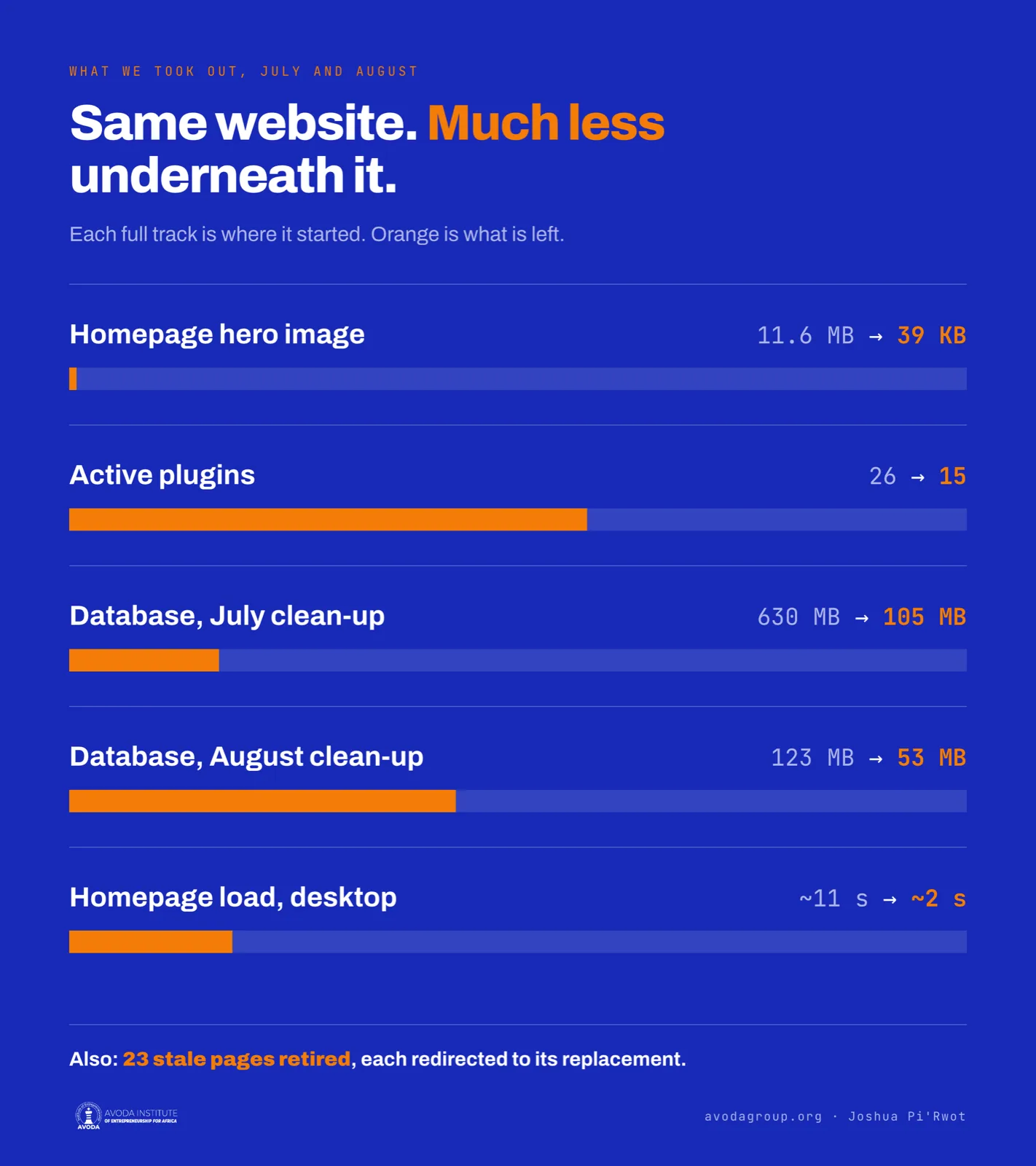
The homepage took about 11 seconds to show its main content on a desktop computer, and more than a minute in our phone test. The picture at the top was a single 11.6 MB file. On prepaid data she would have paid for all of it before reading a word.
If she had tried to call us, the phone number on the site was wrong. If she had read our FAQ, it would have told her about a bootcamp we no longer run. If she had found our AVODA Blue page through an old search result, it would have shown her 2024 prices. There were 23 pages like that: old webinars, past investment fairs, duplicate home pages, all still live and still in Google.
And if she had asked an AI assistant about us before searching, which many people now do, she might have been told AVODA was in “outsourcing”.
None of this was anyone’s fault. Websites drift. Over five years different people added what they needed, and nobody had the time to go back and take things out.
What we kept, and what we changed
The first decision was to keep the tools. The site still runs on WordPress with the Astra theme and the Elementor page builder, on Hostinger. A new platform would have looked like progress and left our team unable to edit their own pages. A website that only an outside developer can change is a liability for a small organisation.
Inside those tools we rebuilt a great deal. The 11.6 MB picture became a 39 KB file that looks the same. Fonts went from four families in every weight to two, Sora and Inter. Ninety key images were converted to a lighter format, bringing a typical page’s image weight from 3.19 MB to 2.01 MB. The homepage went from about 11 seconds to about 2 on desktop.
The 23 out-of-date pages were retired, each one redirected to the page that replaced it so old links still work. The phone number was corrected everywhere. The FAQ was rewritten with 15 answers that are true today. References to the old bootcamp were taken out by hand, page by page, because a blanket find-and-replace would have put one programme’s name into sentences written about another. None of the 23 pages was deleted. Each became a draft, one click from being restored if we turned out to be wrong about it.
AVODA Blue became a single hub page with its four variations underneath: Essentials, Online, the flagship programme and Deep Blue. Prices are published, because a founder deciding whether she can afford us should not have to email to find out. An orange Apply Now button now sits in the header beside Donate. Our donors had asked us to keep the Donate button where it was, so it stayed.
The comparison table on that page, where a founder weighs our programmes side by side, could not be read on a phone. It was rebuilt so the feature names stay pinned while the options swipe across. On a continent where most people browse on phones, a table that only works on a laptop is a closed door.
One finding was about money rather than code. AVODA had paid for an Elementor Pro licence that had been installed and never switched on. It is in use now, at no extra cost.
What AI assistants were reading
Many people now ask ChatGPT, Claude, Gemini or Perplexity about an organisation before they visit its website. Those tools read websites to build their answers, and they repeat what they find.
In late July we found that the small file many of them look for first, called llms.txt, described AVODA as “outsourcing”. It had been generated automatically in February and never updated. For five months, that was what an AI assistant could find about us in the place it was told to look.
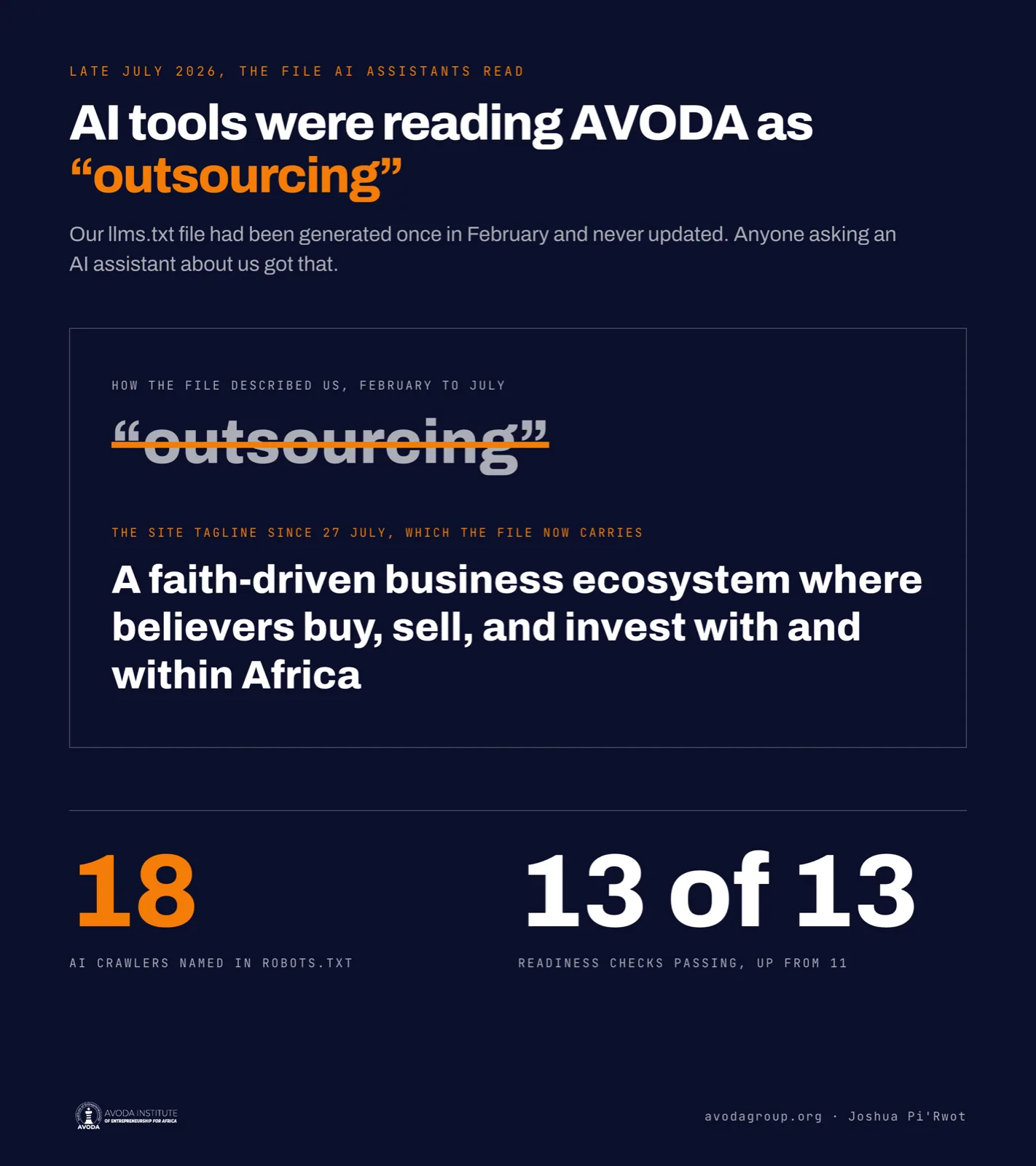
We repaired it and set it to update itself whenever the site changes. We published instructions naming 18 AI crawlers individually and saying how our content may be used. On the public checklist we use for this, the site went from 2 failing checks to all 13 passing. Every page also now carries structured information telling search engines that AVODA is an educational organisation, which pages are courses, and what our frequently asked questions are, drawn from the live FAQ so it stays current.
For a ministry, this is a question of truthfulness as much as visibility. If machines are going to describe us to strangers, the description should be accurate.
Connecting what people read to what we offer
By late July the blog was bringing in most of our new visitors. One July read of our analytics showed blog visits up 107 percent. But a reader who finished an article about pricing had no obvious next step. The articles and the programme pages lived separate lives.
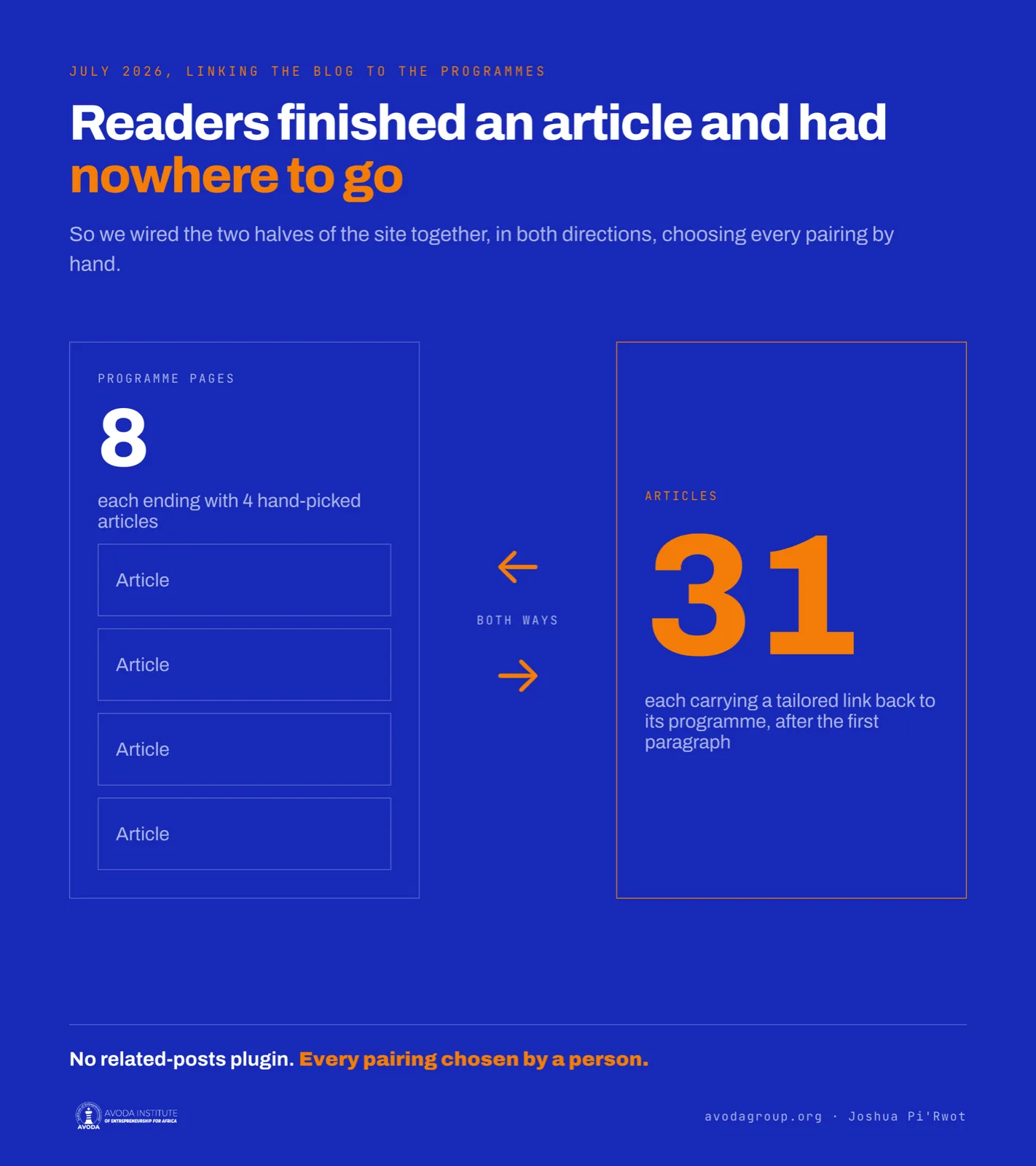
We linked them in both directions. Eight programme pages now end with four hand-picked articles each. Thirty-one articles now carry a short, specific link back to the programme they relate to, placed near the top where readers actually see it. Every pairing was chosen by a person who had read both pages.
The August analytics showed why that mattered. Of 1,464 people who visited in the period we looked at, 1,444 were new, which means about 98.6 percent of readers never came back. Nothing on an article had invited them to.
Articles about building a business now offer a free business assessment through a card that asks “How ready is your business?” Everyone who completes it receives a reference number, so our team can follow up with the right person. We took care with that number. One form had been counting rows to number submissions, and one applicant had submitted twice. Removing the duplicate would have given the next applicant someone else’s number. Both forms now use a permanent ID that can never repeat, so no founder is ever mistaken for another. A series of 14 articles on frontier trends had been ending with no invitation at all, and now they have one. And since late July, every click on Apply Now records which page sent the person, so we can finally see which pages persuade people.
What we found underneath
In August the site was still slower than it should have been, and the reason was invisible from the front.
Years ago public registration had been switched on, so anyone could create an account on our website. Bots had found it. There were 26,148 user accounts. Six belonged to our own team. The other 26,142 had never written a word on the site. Waiting in the comment moderation queue were 10,142 spam comments, against 3 real ones.
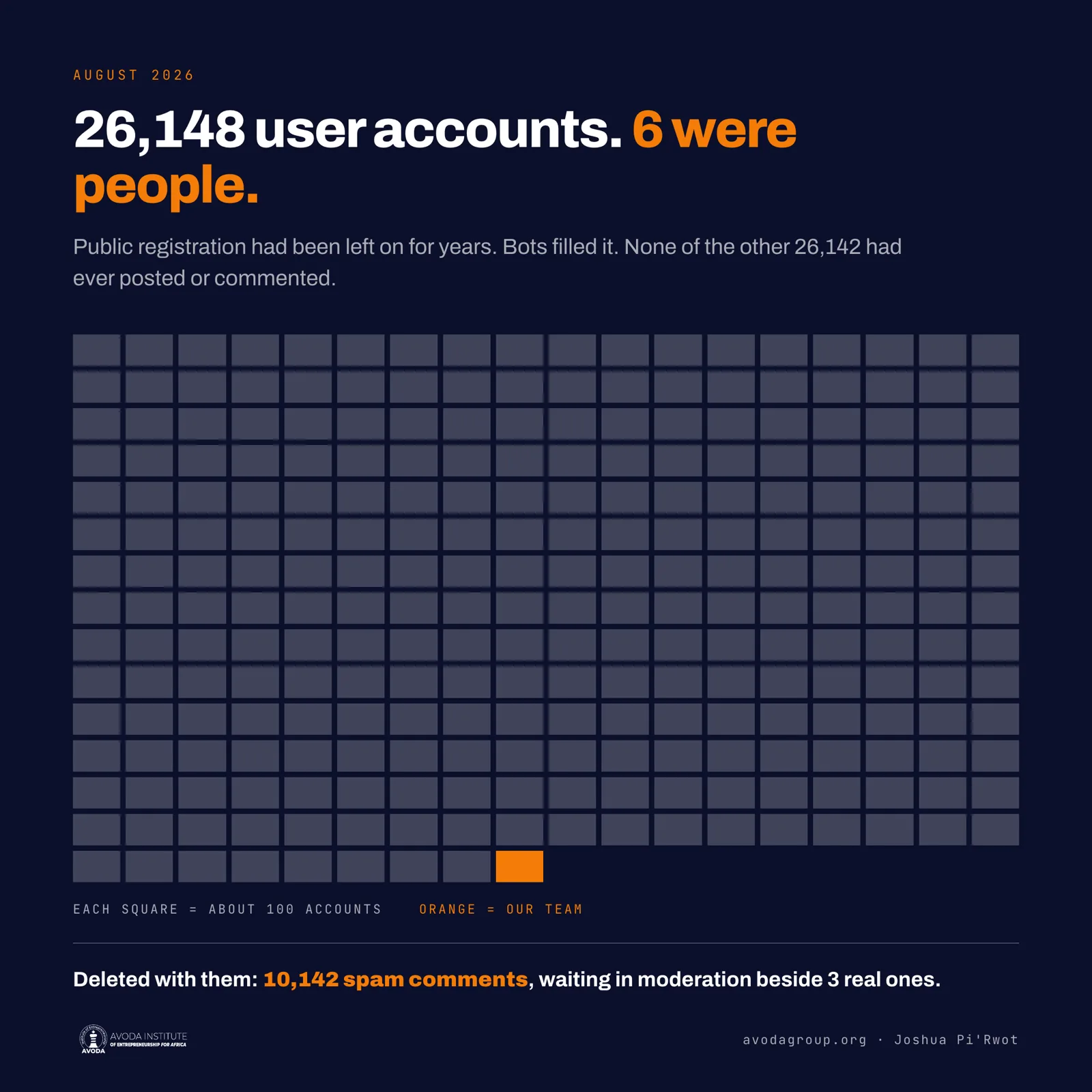
Before deleting anything, we checked that no real applicant would be affected. AVODA keeps applications and assessment results separately, by email address, and none of the people who had applied or taken an assessment had a website account. We took a full backup, closed registration and removed the accounts and the spam. The database shrank from 123 MB to 53 MB, and our assessment pages started responding in about a second instead of two to three.
We also discovered that when anyone shared one of our 351 articles on WhatsApp or LinkedIn, the preview showed our 2019 logo instead of the article’s own picture. A single setting corrected all of them. In a region that shares so many links through WhatsApp, that may have mattered more than it looks, though I cannot measure it.
Ours had been open for years and nobody knew. I suspect plenty of ministry and school websites are in the same state.
There was one scare that had nothing to do with speed. In July a routine change to our domain settings silently removed the record that tells other mail servers our emails genuinely come from AVODA, which is what keeps them out of spam folders. We noticed and restored it within twenty minutes. Had we missed it, emails to applicants during the 1 August deadline week could have gone to spam, and some founders would have assumed we never replied.
Since August the site also backs itself up every day, keeps a week of copies, and refuses to keep a copy that is too small to be genuine, so a broken backup can never quietly replace a good one.
Those details are the unglamorous part of stewardship. Most supporters will never see them. Applicants feel them when their email arrives and their reference number is theirs.
The writing behind the numbers
Speed and structure let Google read a website. Articles are what give it something to show people.
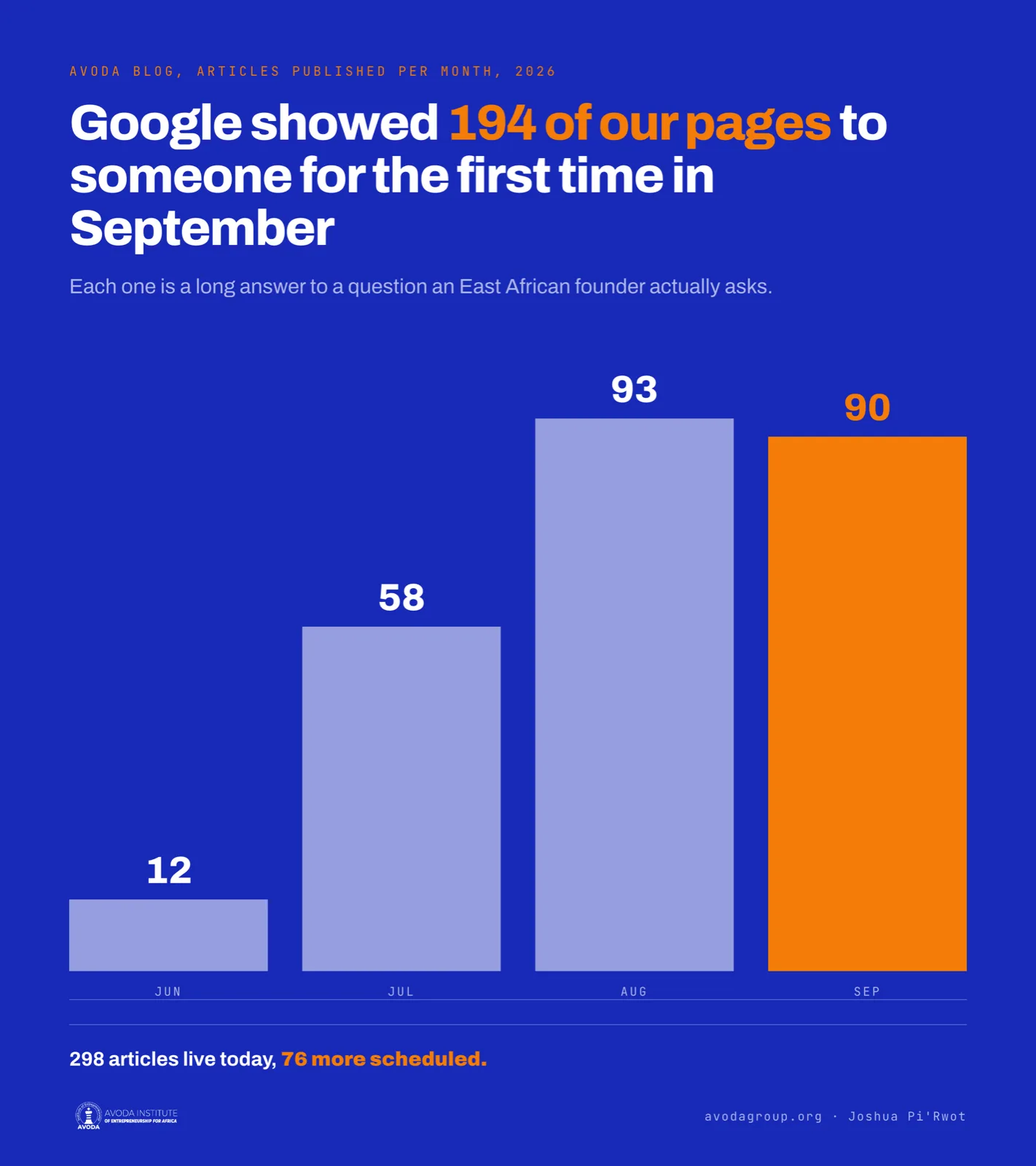
We published 12 articles in June, 58 in July, 93 in August and 90 in September. Today 298 are live and 76 more are scheduled. Faith and Work is the largest section with 69 pieces, followed by Business with 61, Entrepreneurship with 38, and AI for SMEs and AI and Faith with 34 each.
Each one starts from a question an East African founder actually asks. When should I hire my first employee? How do I price a product when my costs keep moving? What does Scripture say about borrowing? Is AI worth anything to a business with three staff? Each works through the answer with real numbers, and with Scripture where Scripture speaks to it. New articles are announced to search engines the moment they go live, through a standard called IndexNow, so Bing and others can list a piece the same day rather than waiting weeks to discover it.
Google’s count of 194 pages shown to someone for the first time in September is largely those articles meeting their first readers.
This afternoon’s fix
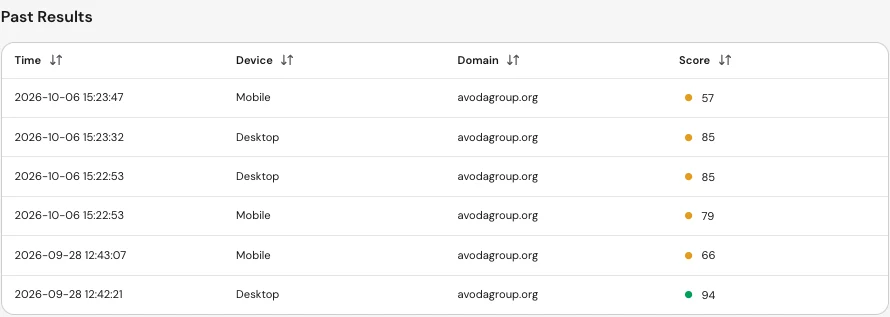
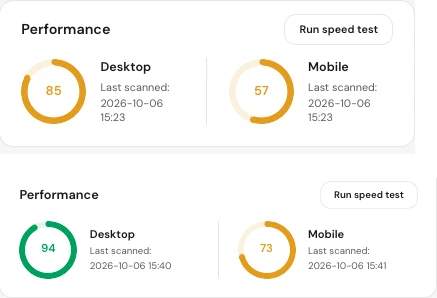
Our host’s speed test scored the homepage 94 on desktop and 66 on mobile on 28 September. By this afternoon it had slipped to 85 and 57.
The cause was a setting in LiteSpeed Cache called Guest Mode, meant to give first-time visitors a fast, ready-made page. On our site it was doing the opposite. The page loaded, checked in with the server, was told to reload, and loaded again. Every new visitor on a phone downloaded our homepage twice. For someone on prepaid data, that is money. And phones are not a side audience for us: 259 of September’s 551 clicks, 47 percent, came from mobile.
We switched it off, moved our fonts onto our own server so phones no longer wait for Google’s font service, and restored a setting that sends the top of the page first. About twenty minutes later the same test read 94 on desktop and 73 on mobile. In our own tests from Kampala, the time for the main content to appear on a phone fell from 7.0 seconds to between 3.1 and 3.4.
One finding from today is still a decision for us to make. Our hosting provider runs a check on each visitor to confirm it is a real browser, and that check adds roughly 0.6 seconds on a phone. Given that bots once created 26,142 accounts on our site, there is a real argument for keeping it. There is also a real cost to every genuine visitor. We will weigh the protection against the delay and decide on purpose.
Two things we expected to help did very little. Upgrading the server’s PHP version was free and barely moved response times. The speed feature hosting companies promote most, an object cache, is only available on a more expensive plan, so we did not buy it. We switched on a free crawler that keeps our page cache warm instead, which took a typical cold page from about 4.5 seconds to start arriving down to about 1.2.
What is still not good enough
A mobile score of 73 is a pass, and only just. Our server is in Europe while most of our readers are in East Africa, so every page travels a long way. Moving content closer to Kampala and Nairobi is the biggest improvement left, and it needs a decision about hosting.
A 1.2 percent click-through rate means 99 of every 100 people who saw us in search did not click. Our most-seen articles need clearer titles and descriptions, and we now know which ones they are.
Most important, a click is not yet a founder. The measure that matters is how many readers go on to take the assessment, apply to AVODA Blue or ask for a conversation. We have been recording that since July, and I expect to report it next quarter. That report will put three numbers side by side: readers who arrived from search, readers who took the assessment, and readers who applied. If the second and third do not move, the writing has to change, and we will say so.
How it was done
No agency was hired. I did the technical work myself, working with an AI assistant, and every decision that would have been hard to reverse, such as deleting 26,142 accounts, was made by a person after a backup had been taken and the applicant records had been checked. Today’s speed changes were all made through settings our team can see and reverse from the same dashboard they already use.
The division of labour was clear. The assistant did the patient, exhausting parts: reading tens of thousands of database rows, counting which accounts had ever posted anything, finding the one oversized picture hidden inside a page-builder setting, and checking each live page after every change. People made the calls that affect people: which old pages could go, what our public prices should say, and whether a deletion was safe. Our web team can still edit every page the way they did before.
If you lead a ministry, school or NGO, these are the questions I would now put to whoever looks after your website. Can anyone create an account on it, and how many accounts exist? What does it say when someone shares a page on WhatsApp? Are your phone number, prices and programme names correct on every page, including the old ones Google still shows? What would an AI assistant tell a stranger about you today? Which paid tools are installed but switched off? Do you have yesterday’s backup, and has anyone checked it opens?
With care and the right tools, a small team can now do in weeks what used to need a contractor and a budget line, and keep control of the result.
If this was useful
If one of our articles has helped you, send it to one founder who needs it. A link from a person they trust still carries more weight than anything we can do on the website.
If you run a business in East Africa, the free AVODA business assessment shows you where you stand and gives you a reference number for follow-up: free AVODA business assessment
What is the one thing on your organisation’s website you have been meaning to check for a year?