
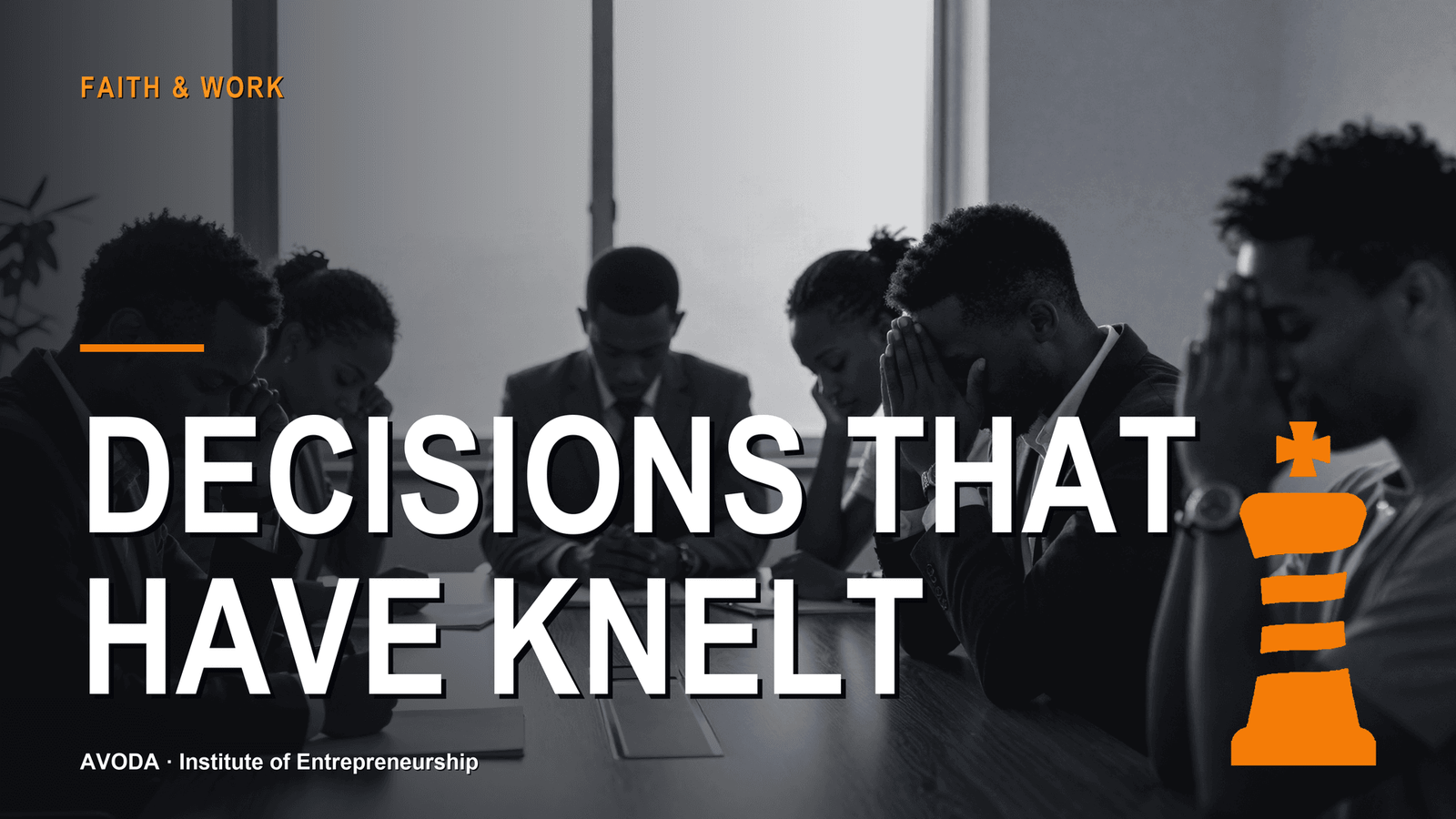
The church at Antioch made its most consequential strategic decision, releasing its two best leaders to a mission that would reshape the world, while worshiping and fasting, and it fasted again before laying hands and sending. Nehemiah fasted before the palace conversation that funded the wall; Esther called a fast before the throne-room gamble; Jesus fasted before choosing the twelve, the most important selection decision in history. The pattern is too consistent to be decorative: in scripture, fasting and gathered prayer cluster around decisions, sendings, appointments, risks, and the tradition read the clustering as method, not coincidence. Modern faith-driven founders mostly retain the vocabulary and lose the calendar: prayer happens at meals and crises, fasting belongs to January’s church program, and the expansion decision, the key hire, the term sheet get whatever spiritual attention survives the deadline. This essay takes the Antioch pattern seriously as executive practice: what the disciplines actually contribute to judgment, what they do not, and how a firm builds them into its decision architecture without theater.
Key Takeaways
- Scripture clusters fasting and gathered prayer around decisions, not just devotion: Antioch’s sending, Nehemiah’s ask, Esther’s risk, and the tradition treated the clustering as method.
- The disciplines contribute identifiable things to judgment: severed hurry, surfaced motives, communal listening, and the embodied acknowledgment that the outcome is not self-secured.
- What they do not do is replace the ledgers: fasting is not a substitute for counsel, numbers, or diligence, and using it as one converts discipline into superstition.
- The Antioch Calendar framework installs four rhythms: daily office at work’s edges, a weekly prayer review inside the operating cadence, decision fasts for named choices, and an annual retreat that sets direction.
- Corporate practice needs consent and freedom: a firm may keep rhythms; it may not conscript consciences, and the disciplines’ integrity depends on their voluntariness.
What does fasting actually contribute to a decision?
Subtraction, which is precisely what crowded judgment lacks. The discipline’s mechanics are unglamorous: hunger interrupts autopilot, the skipped meals create literal hours, and the body’s protest keeps the faster awake to what the decision actually weighs. The tradition’s masters described the effects in terms any executive will recognize: appetites talk loudly enough to be examined, ambition surfaces where it can be confessed rather than steering silently, and the humility of a body reminded of its dependence undercuts the founder-omnipotence that makes bad bets feel safe. Gathered prayer adds the communal layer Antioch models: the decision held before God by people who tell each other the truth, listening practiced together so that confirmation or unease has witnesses, the discernment gates given time to actually operate. None of this manufactures revelation on demand, scripture’s fasts precede guidance without purchasing it, but it reliably produces the conditions judgment needs: unhurried attention, examined motives, communal weight, and the settled acknowledgment, made with the body and not just the mouth, that the outcome belongs to God. Executives pay retreat centers for worse.
What must the disciplines not become?
A bypass around the obedience of diligence, or a lever on God. The superstition failure mode is regional and familiar: the fast undertaken to make the deal close, spiritual effort as transactional currency, which scripture’s own prophets mock, Isaiah 58’s fasters wondering why heaven has not paid invoice. Fasting oriented at outcomes is negotiation; fasting oriented at alignment is discipline, and the difference shows in what happens after an unwanted answer. The bypass failure mode is subtler: the founder who fasts about the expansion but will not build the model, submit to counsel, or run the pilot has used the discipline to feel serious while avoiding the obediences that are also commanded, the tower still uncounted, the field still unplowed. The integration principle from the discernment essay governs here too: disciplines prepare the judge, they do not replace the judgment, and a decision fasted-over but never analyzed is as disobedient as one analyzed but never prayed. Isaiah’s corrective doubles as the business ethic: the fast God chooses ends in loosed bonds and shared bread, disciplines that terminate in how workers and debtors are treated, not in private spiritual accounting.
What is the Antioch Calendar?
The named framework of this essay: four rhythms, scaled from solo founder to leadership team, that put the disciplines where the decisions actually live.
- The daily office at work’s edges. Brief fixed prayer opening and closing the workday, the trading day framed as avodah, with the day’s decisions named in the morning and released at night. Ten minutes, kept like any load-bearing routine, formation by rhythm rather than mood.
- The weekly prayer review. Inside the operating cadence, not beside it: the week’s five numbers and decisions reviewed with thanksgiving and petition, the ledger and the prayer list on the same table, so the spiritual practice touches the actual business rather than a sanitized abstraction of it.
- Decision fasts. The Antioch instrument: named choices above a threshold, key hires, capital and expansion, partnerships, get a defined fast, solo or leadership-wide, with a gathered listening session before the decision meeting. Scheduled, bounded, medically sane, and always paired with the completed ledgers, the fast prepares the deciders the analysis informs.
- The annual retreat. A day or more away, sabbath-adjacent, for direction-level discernment: the year reviewed before God, the coming year’s bets held loosely, the founder’s own health and calling examined, and the firm’s course set with the unhurried attention quarterly pressure never permits.
The calendar’s authority structure matters: leaders may keep and model these rhythms and invite the team; participation in explicitly spiritual practice stays genuinely voluntary, conscience uncoerced, because conscripted devotion forms hypocrites, not disciples, and the watching staff learn more from a boss who fasts quietly and decides humbly than from a mandatory prayer meeting with attendance taken.
What changes when a firm actually lives this?
The decisions slow by days and improve by years, and the culture learns what the firm really worships. Practically: fewer impulse commitments, because the decision fast’s built-in delay filters the urgency theater that manufactures bad deals; cleaner conflict, because motives examined in prayer surface in meetings as named interests rather than proxy wars; and a leadership bench formed in the habit of holding ambition loosely, which is succession’s quietest prerequisite. Witness-wise, the rhythm preaches without a tract: staff, suppliers, and the market notice a firm whose biggest choices wait on prayer and still arrive with honest numbers attached, the combination itself being the testimony. And for the founder, the disciplines do their oldest work beneath the business entirely: the regular, bodily confession that the company is received, not achieved, that the outcome was never self-secured, and that the Lord who fed Elijah can be trusted with a quarter. Antioch fasted, decided, and sent, and the mission outran every plan in the room. The calendar is available. The meals are a small price for judgment that has actually knelt.
FAQ
Does fasting produce better business decisions?
It produces better deciders: interrupted hurry, examined motives, communal listening, and embodied humility, the conditions sound judgment needs. It does not manufacture revelation or replace analysis.
What decisions warrant a fast?
Threshold choices: key hires and successions, capital commitments, expansions, partnerships, the Antioch-class decisions where stakes are high and motives are complicated. Define the threshold in advance.
Can a company require spiritual disciplines?
Leaders may keep, model, and invite; they may not conscript. Voluntary participation protects both conscience and the disciplines’ integrity, and coerced devotion forms hypocrisy, not culture.
What is the Antioch Calendar?
Four rhythms: a brief daily office at the workday’s edges, a weekly prayer review inside the operating cadence, defined fasts before named decisions, and an annual direction-setting retreat.
How do we avoid superstition?
Orient the fast at alignment, not outcomes; pair it always with completed counsel and numbers; and test it by Isaiah 58’s fruit, whether the discipline ends in justice toward workers and debtors.
Related Reading
- Prophetic Direction vs Practical Planning
- Monday Cadence After Sunday Conviction
- Sabbath and the Business Model
- Founder Health and Energy as Operating Asset
Sources and Evidence
- Acts 13:1-3, ESV: Antioch’s fast before the sending decision.
- Nehemiah 1:4-11, ESV: fasting before the funding conversation.
- Isaiah 58:3-9, ESV: the fast God chooses, ending in justice.
- Luke 6:12-13, ESV: the night of prayer before choosing the twelve.