
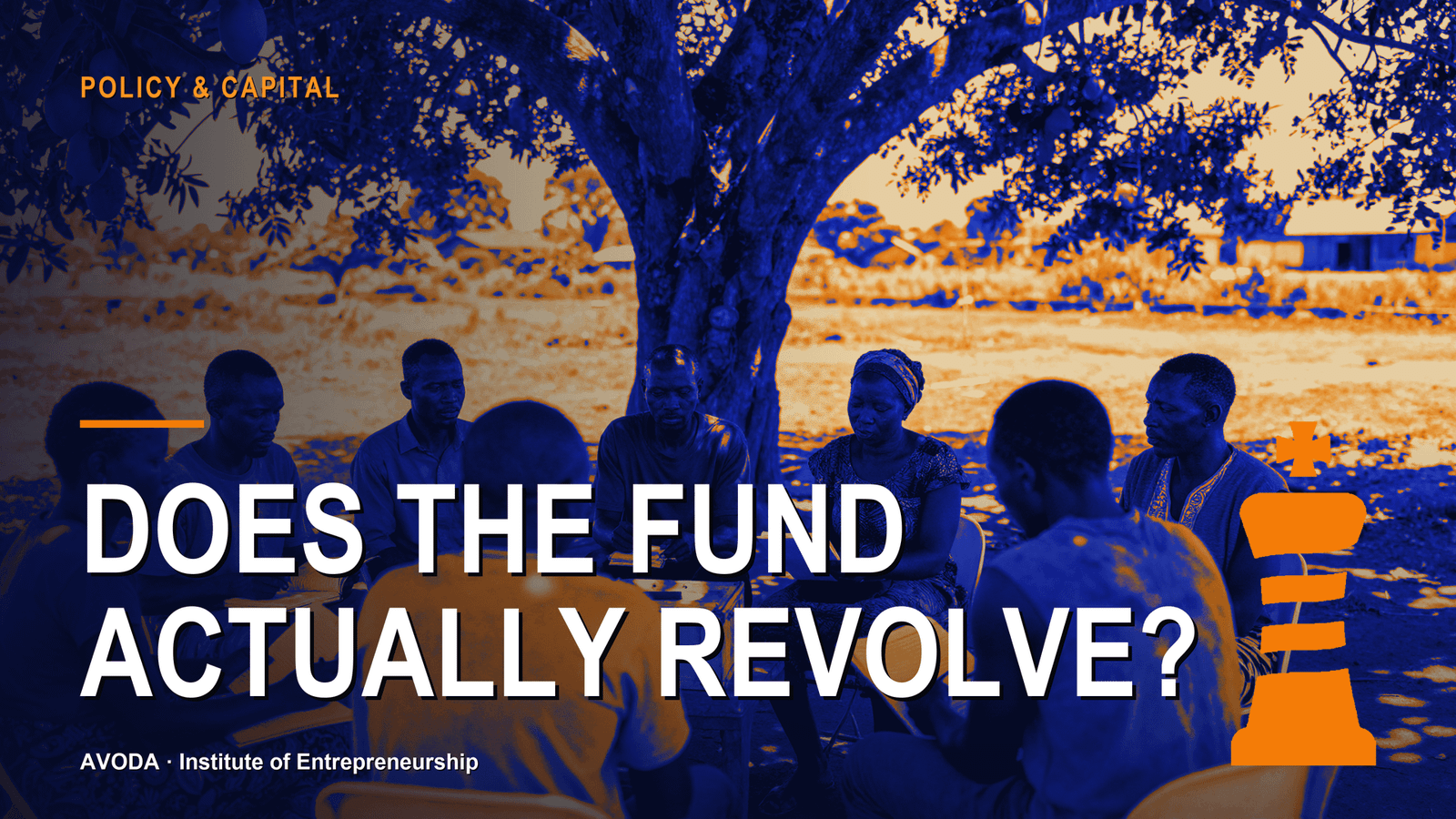
Strip the politics and the Parish Development Model is an audacious experiment in capital allocation. Since its 2022 rollout, Uganda has sent money, on the order of a hundred million shillings per parish per year, to more than ten thousand parishes, to be lent as revolving funds through parish-level SACCOs to enterprise groups of households still in the subsistence economy. The stated target population, the roughly two-fifths of households outside the money economy, is one no bank, microfinance institution, or venture fund has ever seriously attempted to reach with enterprise capital at national scale. Viewed as an allocator, PDM makes three bets simultaneously: that allocation decisions are best made at the parish, by committees closest to the borrowers; that revolving discipline, repayment funding the next borrower, can survive politics; and that subsistence households convert small capital into market participation when selection and support are local. Each bet has a global evidence base, each has a failure mode the program’s own audits have already photographed, and ecosystem builders, including faith-driven ones, should be reading the experiment closely rather than cheering or dismissing it.
Key Takeaways
- PDM is structurally a national revolving-credit experiment: parish SACCOs receive annual capital and lend to enterprise groups, with repayment intended to fund successive cohorts.
- The design’s strengths are real: proximity in selection, standardized allocation across parishes, and a target population commercial finance has never reached at scale.
- The audited weaknesses are also real: disbursement delays, incomplete group formation, weak records, political signaling that loans are gifts, and recovery rates that will decide whether the fund revolves or evaporates.
- The Revolving Test frames the decisive question: a revolving fund is only an allocator if repayment is protected culturally and administratively; otherwise it is a grant program with extra steps.
- Church networks, cooperatives, and accelerators can strengthen the model from outside: group formation quality, record discipline, and repayment culture are exactly the assets they carry.
What is the design, read as finance?
A three-layer allocator. The top layer is fiscal: the treasury appropriates capital per parish annually, a deliberate flattening that funds Karamoja’s parishes on the same schedule as Wakiso’s, trading targeting precision for administrative simplicity and auditability. The middle layer is institutional: each parish’s SACCO holds the fund, with committees vetting enterprise groups, farming, trading, artisanal clusters, against priority value chains. The bottom layer is the loan: modest capital per group member, at concessional terms, with repayment schedules meant to match production cycles. The architecture consciously echoes the region’s own successes: SACCO capital formation and group-lending mechanics whose global evidence, from Grameen-style joint liability to village savings associations, shows that proximity and peer accountability can substitute for collateral among borrowers the formal system cannot see. The wager is that the state can manufacture, by statute and disbursement, the institutions communities usually grow slowly, and that is where the early evidence divides.
What does the early evidence actually say?
That money moved, and discipline lags. On the credit side of the ledger: funds have reached parishes at national scale, enterprise groups in the hundreds of thousands have formed, and household stories of first-time productive assets, heifers, seed capital, inputs, are documented and numerous. On the debit side, the Auditor General and parliamentary reviews have catalogued the allocator’s classic pathologies: delayed and partial disbursements, groups formed on paper to meet quotas, beneficiaries selected by influence rather than criteria, records too thin to compute honest recovery rates, and, most corrosive, political messaging in some quarters that PDM money is appreciation rather than obligation, the single narrative most lethal to a revolving fund. None of this is surprising; it is the standard first-cohort report of every mass allocation program, and the comparison set, government accelerators, input-subsidy schemes, and prior enterprise funds, warns exactly where the road forks: programs that enforced repayment and published recoveries became institutions; programs that did not became one-off transfers wearing a fund’s name.
What is the Revolving Test?
The named framework of this essay: four conditions that decide whether a revolving fund actually revolves, applicable to PDM at national scale and to any church or community fund at parish scale.
- The obligation is culturally unambiguous. Every actor, from minister to parish chief to pastor, describes the money as a loan. One prominent voice calling it a gift repricing repayment as optional can undo a thousand committee meetings; message discipline is fund protection.
- Records make recovery computable. Group registers, disbursement dates, schedules, and repayments in a ledger that aggregates upward. A fund that cannot publish its recovery rate cannot defend its budget, and receipts are the argument that survives changes of government.
- Selection survives influence. Criteria-based vetting with published beneficiary lists, because the allocator’s credibility with future repayers depends on who got the last round and why.
- Repayment buys something visible. The second cohort must observably exist and be funded by the first’s repayments, the flywheel made public. When repayment visibly becomes a neighbor’s opportunity, joint accountability acquires a moral engine; when it disappears into the district, default becomes rational.
The test’s edge is that it converts debate about PDM from ideology to observables: recovery rates, published lists, second-cohort funding. Those numbers, not testimonials, will say whether Uganda built an allocator or ran a transfer.
Where do faith networks and ecosystem builders fit?
At the exact links the audits flag. Group formation quality is a discipleship-adjacent craft: churches and fellowships already convene the trust-dense small groups that lending mechanics need, and a congregation that helps its members form honest enterprise groups, real members, real plans, real registers, is strengthening the fund’s weakest input. Record discipline is teachable: the same basic bookkeeping and five-number habits this corpus urges on SMEs scale down to enterprise groups, and trainers who install them multiply recovery odds. Repayment culture is a stewardship teaching in waiting: Psalm 37:21 puts it plainly, the righteous repay, and a pulpit that frames PDM repayment as covenant faithfulness rather than state extraction does more for the revolving fund than another audit. And for accelerators and BDS providers, the parish groups that survive their first loan cycle are a deal-flow layer nobody is watching: the subsistence-to-market transition, done honestly, is the base of the pyramid every missing-middle narrative eventually needs. The experiment deserves neither cynicism nor cheerleading. It deserves witnesses with ledgers.
FAQ
What is the Parish Development Model?
Uganda’s flagship program routing annual capital, on the order of one hundred million shillings per parish, to parish-level SACCOs, which lend to household enterprise groups, aiming to move subsistence households into the money economy through revolving funds.
How is PDM different from previous programs?
Scale and structure: standardized allocations to over ten thousand parishes, parish-level selection committees, and an explicit revolving design where repayments fund subsequent borrowers, rather than one-off grants or district-level schemes.
What problems have audits found?
Delayed and partial disbursements, paper groups, influence in beneficiary selection, records too weak to compute recovery rates, and messaging that blurs whether the money is a loan, the flaw most dangerous to a revolving fund.
What is the Revolving Test?
Four observables: unambiguous loan messaging from all actors, records that make recovery computable and published, selection that survives influence, and visible funding of second cohorts from first-cohort repayments.
How can churches and NGOs help without politicizing?
By strengthening inputs the fund needs regardless of politics: honest group formation, basic record-keeping training, and teaching repayment as stewardship, while asking publicly for the recovery numbers that keep the allocator honest.
Related Reading
- 824 Startups. Zero Receipts.
- Chama and Savings Groups: Covenant Economics
- The Church as an Economic Institution in Africa
- The Missing Middle Is a Management Problem
Sources and Evidence
- Ministry of Local Government, Uganda: PDM: program structure, parish allocations, and implementation guidelines.
- Office of the Auditor General, Uganda: audit findings on PDM disbursement, group formation, and records.
- Parliament of Uganda committee reports: oversight reviews of PDM implementation.
- World Bank research on group lending: evidence on joint liability, village funds, and revolving credit sustainability.